
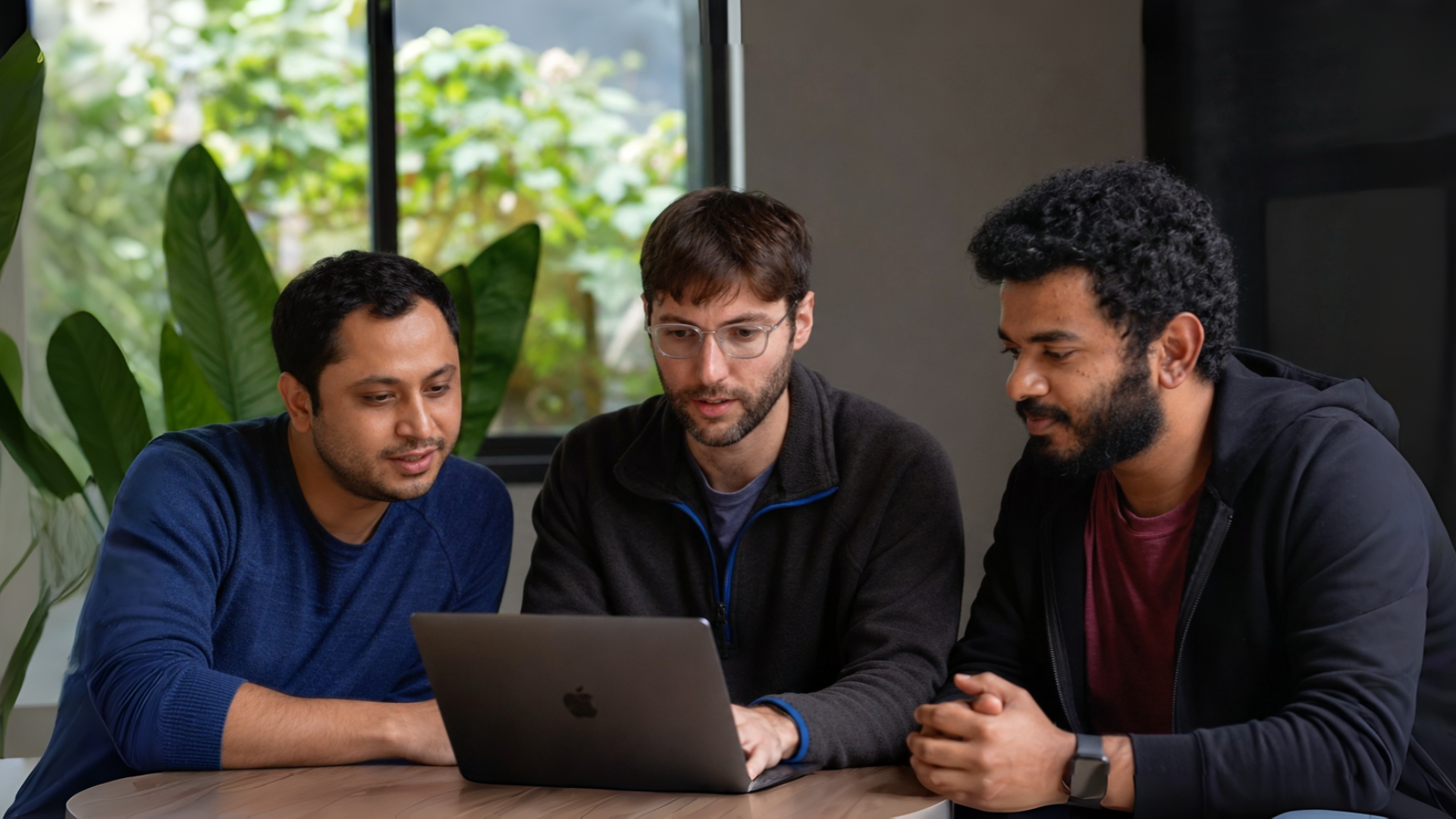
Three engineers saw something developers hate: battling live data streams. Shikhar Bhushan, Stephen Balogh and Dwarak Govind Parthiban had all built massive systems at Etsy and Meta, so they know how quickly an app can choke on real-time data. Now their startup, S2.dev, is live – it just announced general availability and a $3.85M seed round led by Accel (total capital raised $5.5M). Based in San Francisco, S2.dev promises to make streaming feel as simple as storing files.
S2.dev treats each data stream like a cloud file. Developers use a simple API to append data to a stream, and S2.dev automatically stores every event durably. Streams are bottomless (they can grow indefinitely in cheap object storage), and any number can exist per project. In practice, this means you just hit a URL instead of managing servers. As one founder put it, they basically gave Kafka’s log a web address and built a dead-simple API around it.
Teams use S2.dev to power live features without extra complexity. Early customers are using it for real-time telemetry, multiplayer games and AI agent interactions. For example, one CTO says S2.dev is “rock solid” for streaming logs and metrics. Another engineer noted that network hiccups no longer break their AI pipelines, since S2.dev can buffer and persist every event. The founders say customers are already pushing terabytes of data through millions of streams each week.
This comes at a time when live data is in huge demand. Modern apps – from AI assistants to multiplayer games to collaborative analytics – all rely on constant data streams. Traditionally, teams assembled tools like Apache Kafka, Redis or NATS to handle that, often at the cost of more ops work. Investors have noticed S2.dev’s approach: the Accel-led seed round (with backing from Y Combinator and others) reflects a wave of bets on cloud-native developer tools.
The team says it’s already planning more features for AI builders: things like agent-specific streams, bring-your-own encryption keys, and support for additional regions and queuing. Broadly, S2.dev is betting on a future where developers ship quickly and worry less about plumbing. If it delivers, the next generation of real-time apps could get built faster and with far fewer headaches.

Adarsh is the founder and editor of Yeamt, where he breaks down AI, startups, funding, developer tools, and emerging technology into clear, practical explainers for founders, builders, and tech readers.