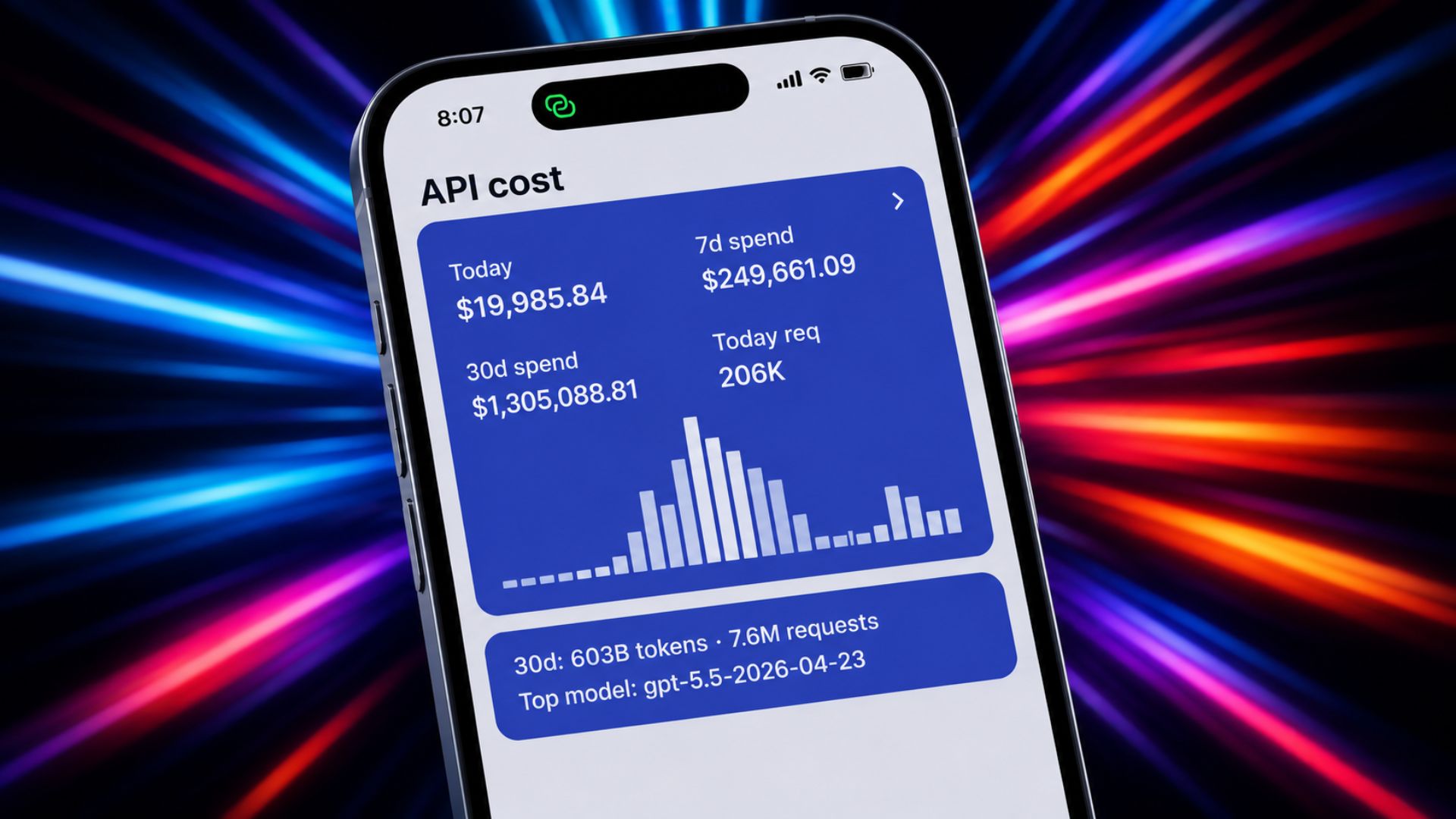
Peter Steinberger, the founder behind OpenClaw, just posted one of the most revealing screenshots in AI tooling this year. His latest CodexBar update shows real-time API spending, token usage, and request volume in a way that makes the economics of AI coding impossible to ignore. The screenshot quickly spread across X because it answered a question many developers secretly have: what does serious AI-assisted software development actually cost?
According to the dashboard, CodexBar processed roughly 603 billion tokens and 7.6 million requests over 30 days. The total spend shown in the screenshot crossed $1.3 million Api Cost. That number immediately triggered debates across the AI ecosystem because it exposes the operational reality behind modern AI coding workflows. For many people, AI still feels cheap because the visible subscription layer hides infrastructure costs happening underneath.
The thread also revealed where most of the spending actually goes. When asked whether the huge API bill mainly came from OpenClaw development, Steinberger confirmed that most of the usage was indeed tied to OpenClaw. That gave people a clearer sense of how aggressively the project is being developed with AI assistance.
Another interesting exchange came when a user questioned how many engineers’ worth of production code had actually been shipped compared to the $1.3 million spent on tokens. Steinberger replied that disabling “fast mode” makes the costs 70% cheaper, bringing the spend closer to the cost of one employee while still helping “wayyy more”.
Apart from that, Even small details in the thread became part of the conversation. One user jokingly asked why the app still says “Twitter” instead of “X.” Steinberger’s answer was simple: “I still call it Twitter. Choices.” That short reply ended up getting almost as much attention as the dashboard itself because it matched the tone developers love online.
Another discussion focused on token efficiency and caching. One developer asked whether CodexBar could separate cached tokens from fresh input and output tokens, arguing that cache hit rates tell the real story behind AI economics. Steinberger responded that the app simply pulls the data from a server and does not calculate those metrics locally.
One user asked how to track session limits across two separate Claude Code subscriptions, one tied to a personal Gmail account and another connected to a business email. They also requested support for tracking multiple accounts under the same provider. Steinberger replied that “CodexBar already supports registering multiple accounts”, a feature many users in the thread did not realize already existed.
Several users also asked about additional model providers. One developer specifically requested xAI and Grok integration inside CodexBar so they could track usage there too. Steinberger responded with a simple “Yup!”, and the reply quickly got attention from users hoping to see broader AI provider support added to the app.
Platform support became another major topic. A user asked whether CodexBar was only available on Mac. Steinberger clarified that while the main app is macOS-focused, the CLI version already works on Linux as well. That detail attracted even more attention from developers running AI workflows on servers and remote machines.
One of the funniest exchanges came when someone asked whether Steinberger personally pays Sam Altman for all those API costs or whether the usage was “on the house.” Steinberger answered that one of the perks of OpenAI supporting OpenClaw. The reply immediately fueled more curiosity around how closely frontier AI companies are working with influential open-source developers.

Adarsh is the founder and editor of Yeamt, where he breaks down AI, startups, funding, developer tools, and emerging technology into clear, practical explainers for founders, builders, and tech readers.