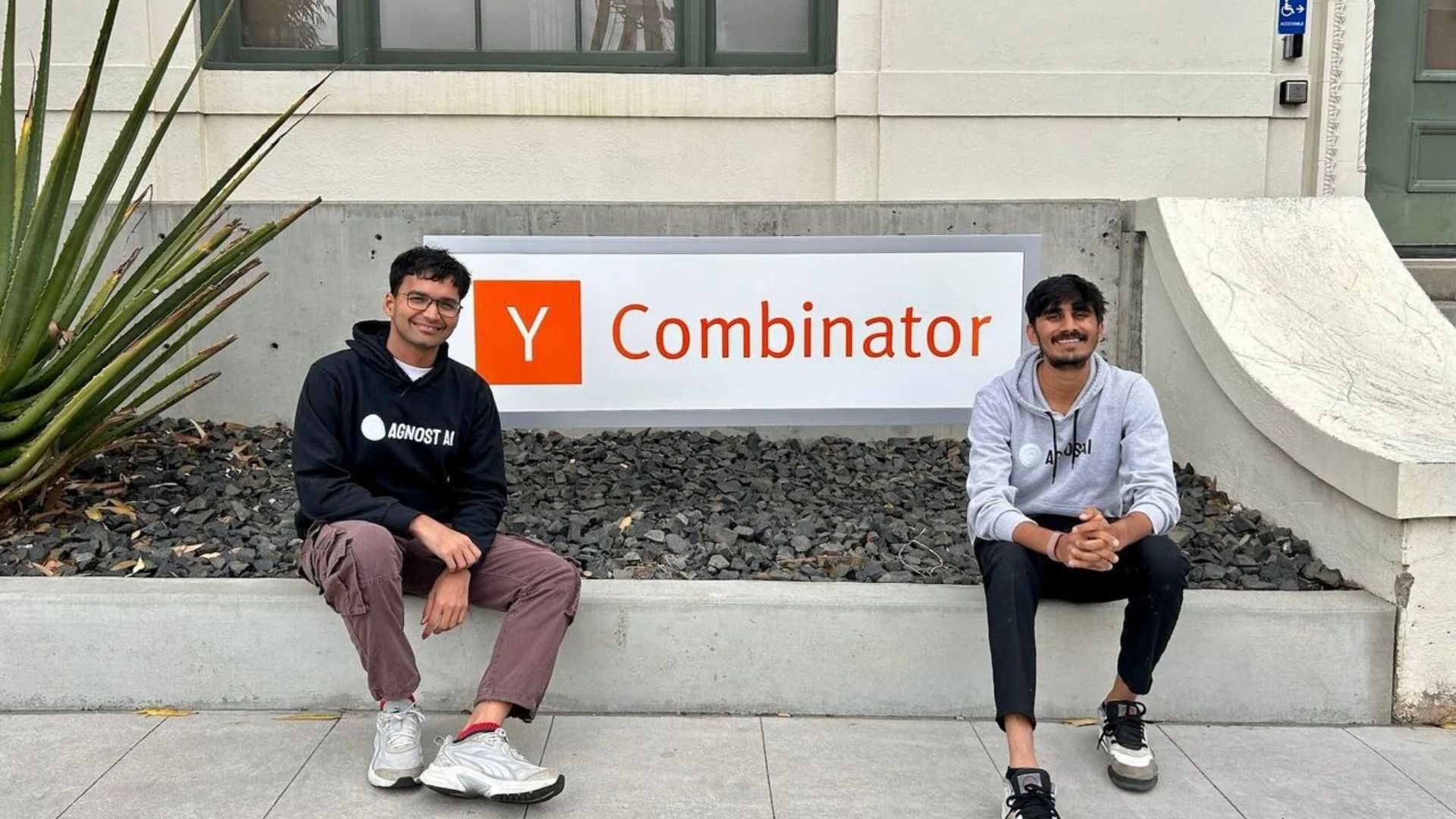
Agnost AI helps companies find where their AI agents give wrong answers or fail to do what users ask. It analyses conversations to uncover repeated mistakes and missing features, then helps developers investigate and test fixes. Shubham Palriwala and Parth Ajmera built it after founders developing AI assistants asked for a better way to understand what their users were saying.
The two had been friends for more than eight years. Palriwala worked on Cisco’s analytics team and was the first hire at Formbricks. Ajmera studied computer science at IIT Madras, built data pipelines at Microsoft, and worked on GPU technology at Infurnia. Their company received backing from Entrepreneurs First and joined Y Combinator’s Summer 2026 batch.
After roughly a year of working around agents, they began hearing requests for a “PostHog for conversations.” Teams building chat and voice assistants wanted to find feature requests, bugs, and signs of frustration in the exchanges they were already recording.
In a Hacker News post, the founders described an AI video-editing company whose users asked for captions, audio transcripts, and text added to individual frames. One repeated the frame-text request 12 times in a session. According to the founders, Agnost connected requests from around 70 users to the same missing feature: automatic subtitles. The video-editor team later built it.
Agnost also looks for users correcting an answer or asking again. It brings similar failures together so developers can see which mistakes recur, then examine the conversations alongside the agent’s tool calls to understand how it produced the answer.
Finding the cause determines what to change. Incorrect information from a tool is a different problem from an agent misunderstanding a question. Agnost suggests prompt changes that developers can test against past conversations, review, and approve before they are applied automatically.
The subtitle requests led to a new feature. A repeated wrong answer needs a different response, but both give the team something specific to work on. Agnost’s founders are building around feedback users provide while trying to get a task done, without asking them to file a separate report.

Adarsh is the founder and editor of Yeamt, where he breaks down AI, startups, funding, developer tools, and emerging technology into clear, practical explainers for founders, builders, and tech readers.