
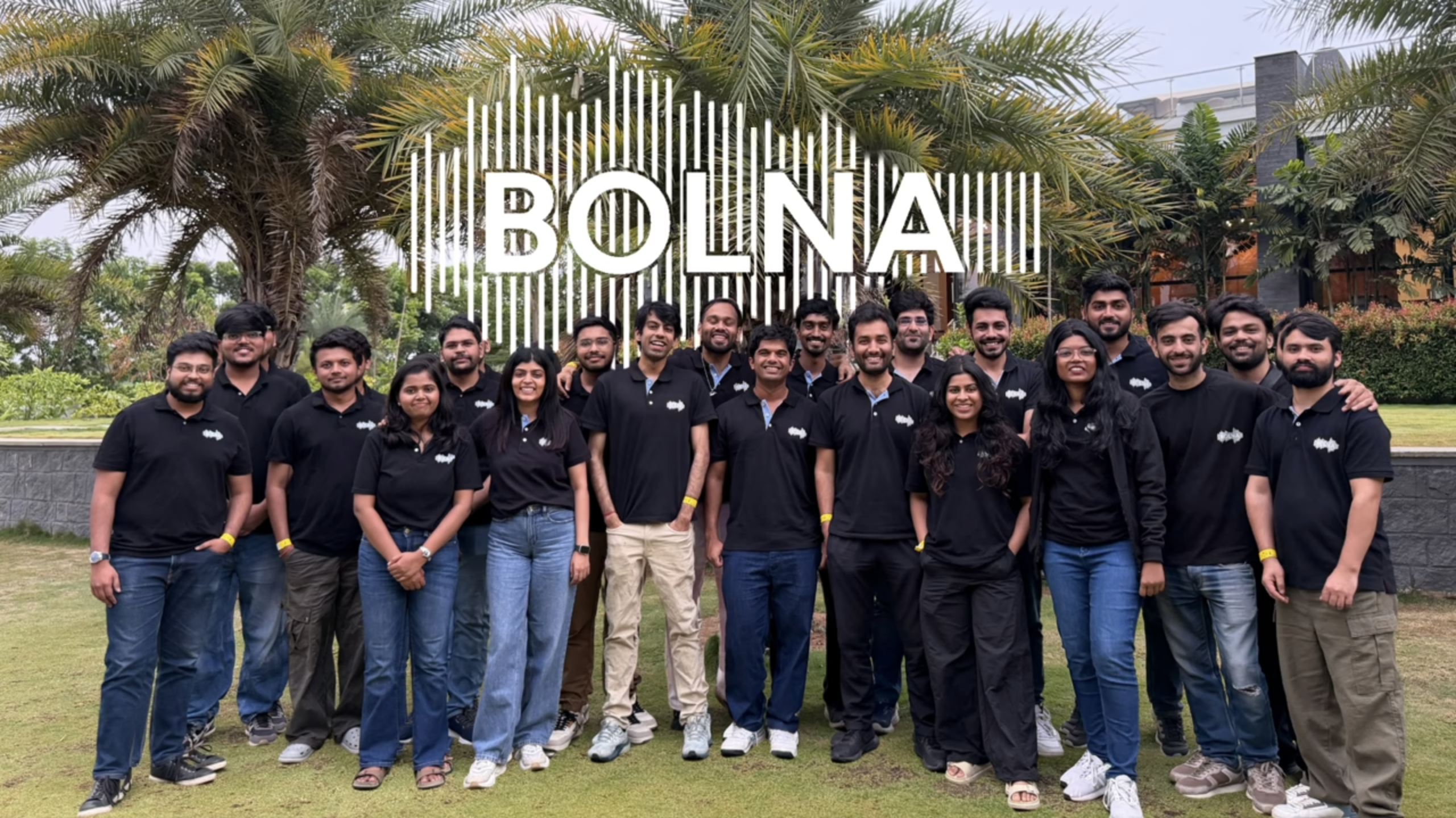
In India the phone is still the backbone of business – banks, e-commerce companies and even schools rely on it daily. But handling calls in 10+ languages and dialects is a nightmare. That’s why a Bangalore startup built AI voice agents to do the job. Bolna’s system speaks Hindi, Tamil, Marathi and more, automating routine calls that humans used to struggle with. Thanks to faster AI models and cheaper cloud, the solution has arrived just as companies really need it.
Bolna was founded by Maitreya Wagh and Prateek Sachan, who finally got into Y Combinator’s fall 2025 batch after five tries. By then the company was already making tens of thousands of dollars per month. That traction helped it raise $6.3 million in seed funding in early 2026, led by General Catalyst. The founders note that about 75% of its revenue comes from small businesses using the self-serve platform, even as large enterprises line up pilot projects.
At its core, Bolna is a voice orchestration platform built for India’s scale and complexity. Users simply describe a workflow (for example, confirming a delivery in local languages), and Bolna picks the right AI models and handles the rest. The system seamlessly routes calls across different accents, filters out background noise, and even understands numeric keypad inputs when needed. It can also swap between voice AI engines to always use the latest model that works best for each call.
Real customers are already using it. Spinny, a used-car resale platform, uses Bolna to schedule test-drive calls in multiple languages. Snabbit, an on-demand home-services startup, automates customer appointment calls with Bolna’s agents. In trials with banks and retailers, the AI agents have achieved higher pickup rates and lower costs than human callers.
India has 1.4 billion people and dozens of official languages, so no human call center can handle that variety cheaply. Bolna’s approach is part of a larger shift: companies worldwide – from local banks to global tech giants – are automating customer calls with AI. Its founders believe these smart voice bots can cut costs and improve service, even for small businesses in India.
For now the startup’s focus is growth. The team is adding more Indian languages, smarter conversation flows and partnerships with telecom carriers. If businesses keep signing up, we may soon see entire support teams replaced by a few engineers maintaining AI pipelines. In India’s market, Bolna’s founders believe ordinary phone calls are getting an AI-powered upgrade – and they want to be the provider.

Adarsh is the founder and editor of Yeamt, where he breaks down AI, startups, funding, developer tools, and emerging technology into clear, practical explainers for founders, builders, and tech readers.